
Paris, Without the Guesswork: A Practical Guide for Solo Female Travelers
Flying In and Out of Paris
Arriving at the CDG Airport
Paris-Charles de Gaulle Airport (CDG) is a large and sometimes overwhelming airport.
Allow time to go through immigration and customs. There can be long lines here.
Plan accordingly and use the restroom before getting into the long border control line.
Getting into Paris
From CDG, you can take the train into the center of Paris or a taxi. Using the train will require more walking than the taxi ride option.
A taxi is more expensive.
The train into Paris is a bargain but be prepared for the following:
You will need to walk to the train station within the airport. There are signs showing you where to go. The station is connected to the airport.
The airport train station has a cafe area so you can get a hot cafe au lait before your expedition into France’s train/metro system. Fortified, you can do it. Thousands of travelers do it each year!
You will need to buy a train ticket. There are self-service kiosks near the train station entrance area.
There are train ticket attendants around to help you in case you are confused (it can be a bit confusing the first time you do this).
Important: Be sure to request the ticket receipt when given this option.
Once you have a ticket, you will scan it at the automatic doors to get into the train area. Sometimes, these tickets don’t scan for whatever reason. This is why it’s important to have your receipt.
If your ticket doesn’t scan, go find an attendant who can issue another ticket when you show your receipt.
Your train ticket can be used later in Paris’ extensive metro system. You will be able to add money to it.
Also, you sometimes need to show this ticket again to get out of the station, so keep it in a safe place.
You will need to manage your luggage on the airport train. Consider this when packing. We recommend one suitcase (50 lbs or less), one backpack, and one cross-body purse.
Always be aware of people who may be trying to separate you from your belongings on the airport train, especially when you are tired and have jet lag.
There may or may not be elevators at your train or metro station stop. Keep this in mind when packing your luggage. How much can you carry up stairs?
More on Trains
If you are taking the train later from Paris to Aix-en-Provence or another part of France, follow these general rules.
Be advised, if you choose a seat on the upper level/deck, you’ll need to carry your luggage upstairs (or stow it on the lower level where you will not see it).
Allow plenty of time to get to the train station from your hotel in Paris. If you take a taxi from your hotel to the train station, there can be traffic and delays. Ask the hotel front desk staff how long it takes to get to your train station as they often have a better idea on timing.
Arrive at the station 45-60 minutes before your train departure time.
Paris train stations can be large and crowded and it’s better to have time to find your way to the right track, get a coffee, and use the restroom.
Note that train station restrooms require you to pay. Usually, this is 1 euro. Have change on you in euro coins. Oftentimes, a credit card will not work.
About 20 minutes before your train’s departure time, the information display screens will show your train’s number and the track where you will find it.
As soon as your train’s track is announced, make haste and get over to the track area.
You often need the whole 20 minutes to get situated. Don’t delay.
A staff member will scan your ticket and then you will make your way to the train track.
You will then look for your carriage number and then your seat number.
Once inside, find the luggage rack in your carriage and hoist your luggage into the rack. Sometimes this means lifting your luggage. Can you lift it? If not, you are packing too much.
There is no train staff to lift and stow your luggage. You may be able to get some strong fellow passengers to help you, but no guarantees.
Luggage sorted, now find your seat.
Smaller items like your backpack and coat can go in the rack over your seat. Never stow anything of great value where you can’t see it. Keep your purse on you.
At some point, the train staff will come through and check your ticket, so don’t throw it out, or be sure you can access it on your phone.
If you are in First Class there will likely be coffee service (someone coming through selling coffee and snacks).
There is also a cafe on most long-distance trains.
Long-distance, fast trains can travel at speeds up to 300 kph. It’s thrilling and a fast way to get from A to B.
Trains are comfortable, efficient and fairly easy to use once you get the hang of them.
Most trains will have a screen in your carriage telling you what stops are coming up and arrival times.
Points of Confusion
Sometimes they line up two trains back to back. Your train may be the second one. Ask a station representative if you are confused.
Sometimes it can be difficult to find your seat. Ask other passengers if you’re getting overwhelmed, most are willing to help you.
Paris Hotels
Stay in Paris a few days before or after your trip with us. Paris is a big city and it is important to stay in the right area.
Beautiful rooms in a centrally located neighborhood
Quiet, cozy, nice breakfast area
We like this family-run hotel with its cozy “designer” rooms and its lovely breakfast
Coffee and snacks served in the evenings
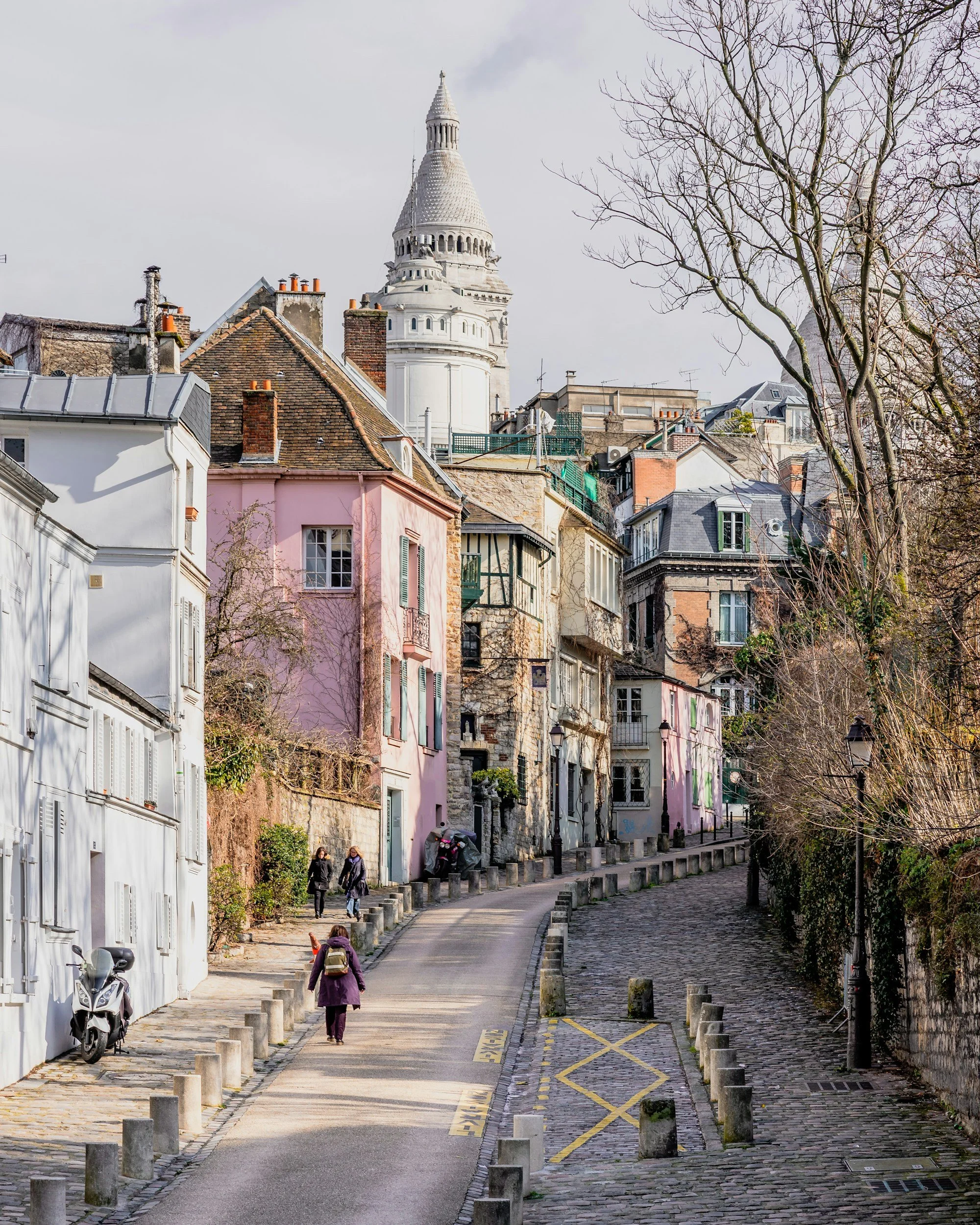
Great location in Montmartre with tons of cafes, restaurants, boutiques, and bakeries
Good prices and it has an elevator
You will be close to the Moulin Rouge and Sacré-Cœur Basilica with one of the best views of the city
Things to Do in Paris
There is no shortage on how to spend your time and there are many travel guides out there to help you plan your days.
The NYT has a great Travel Guide to the city from 2025.
Be prepared to walk a lot and/or to take public transportation. The metro will get you around Paris, as will taxis and your own two feet.
Enterprising individuals with bicycle tuk-tuks are also around to pedal you from the Louvre to the Tullieres Gardens, but make sure to confirm the rate with them before hopping in and make sure you have cash on you.
If you plan to visit a popular museum or monument, make sure you have tickets reserved in advance.
Whenever possible, use a local guide to enrich your experience.
Note that tickets for Notre-Dame are free. Beware of sites trying to charge you. You can reserve a free ticket, although it is not necessary. The cathedral welcomes between 30,000 and 35,000 visitors every day. The wait time is often much shorter on weekdays, in the morning, or on Thursday evenings.
Eiffel Tower: You can simply visit the outside of the monument or book a ticket to go inside and all the way up. Book tickets to climb to the first and second floors (674 steps).
The city metro will get you to Eiffel, as will a taxi. It’s a 8-10 minute walk from the metro station to the monument. Wear your comfy shoes.
Paris Restaurants
Both Eater and the Michelin Guide have lots of information on where to eat. Reservations are a great idea.
Money and Tipping
Service is included in your restaurant bill. If you want to tip more, you can, especially if it is great service, but it is not obligatory.
Tipping in a coffee shop: If a coffee is 3.00 euros, you might tip .30 -.50 cents or nothing.
When you make a purchase, you may be asked if you want the purchase in USD or euros. Always choose euros as you will be charged a fee for conversion into USD.